
Foot and ankle surgeries—from bunion corrections to fracture repairs—require precise billing to avoid lost revenue. One of the biggest challenges is understanding how global surgical periods impact reimbursement.

Understanding Global Periods
Each surgery CPT code has a global period—0, 10, or 90 days—during which related post-op visits are bundled with the procedure payment.
For example:
- Bunionectomy (CPT 28292): 90-day global
- Simple nail removal (CPT 11730): 10-day global
Billing for post-op care during this time may result in denials if not coded correctly.
Modifier Usage
- Modifier 24: Unrelated E/M service during post-op period
- Modifier 58: Staged or planned procedure during post-op
- Modifier 78: Unplanned return to OR for related procedure
- Modifier 79: Unrelated procedure by same provider during post-op period
Documentation Tips
- Clearly document when a visit is unrelated to the surgery (e.g., contralateral foot issue).
- Indicate staged procedures in the operative note if planning multiple interventions.
- Track global period start and end dates in your EMR to avoid unintentional denials.
Avoiding Revenue Loss
- Capture separately billable services like casting, X-rays, or injections that are not part of the global package.
- Educate staff on which codes are bundled vs. separately payable.
Custom orthotics are a core part of podiatric care—but getting paid for them can be tricky. Many practices either under-bill or fail to capture revenue altogether because of unclear payer rules.

Orthotic Device Codes
- L3000 – L3030: Custom foot orthotics (each foot)
- A5513: Therapeutic diabetic inserts (custom molded)
- A5500: Diabetic shoes (per pair)
Be sure to bill per foot when applicable and include modifiers if required.
Coverage Challenges
- Medicare: Generally does not cover orthotics unless for diabetic foot disease.
- Private Insurance: Some plans cover partial cost, others exclude orthotics entirely.
- Cash Pay: Practices often set up payment plans or package pricing for patients.
Documentation Requirements
- Medical necessity must be clearly stated: pain, deformity, ulcer prevention, etc.
- Include physical exam notes and gait analysis results.
- Save the orthotic prescription and casting documentation in the patient chart.
Tips to Reduce Rejections
- Verify benefits before casting.
- Collect copays or full payment upfront for non-covered orthotics.
- Provide patients with a letter of medical necessity to submit to their insurer.
Communicating Costs to Patients
Patients appreciate transparency. Offer a printed cost breakdown and explain whether their plan covers the device or if it’s a self-pay item. This avoids confusion and improves collections.
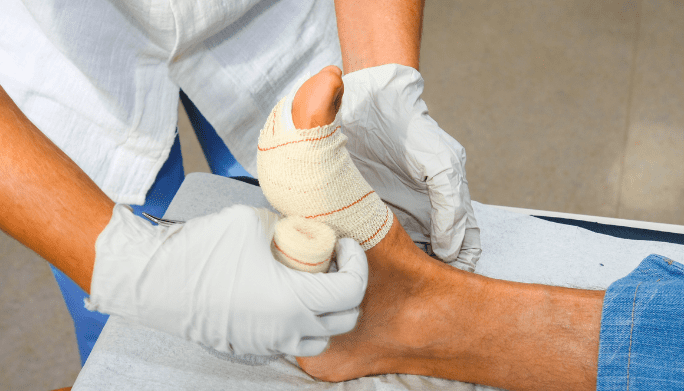
Wound care is one of the most common—and complex—services podiatrists provide. Proper billing and coding are essential for timely reimbursement and to avoid costly denials.
Why Wound Care Billing Matters
Chronic foot wounds, diabetic ulcers, and pressure sores are time-intensive to treat. If documentation or coding is incomplete, payers may reject the claim, delaying payment for care you’ve already provided.
Key CPT Codes for Wound Care
Some of the most frequently used wound care codes in podiatry include:
- 97597 / 97598: Selective debridement (first 20 sq. cm, add-on code for each additional 20 sq. cm)
- 11042 – 11047: Excisional debridement of subcutaneous tissue, muscle, or bone
- 97602: Non-selective debridement (e.g., wet-to-dry dressings)
Documentation Best Practices
- Record wound size, depth, and location at every visit.
- Specify method of debridement (sharp, mechanical, enzymatic).
- Include before-and-after measurements to show progress.
- Attach supporting photos when possible (many payers request them).
Common Denial Reasons
- Missing wound measurements
- Inconsistent progress notes
- Lack of medical necessity documentation
How to Avoid Denials
- Use a checklist to ensure documentation is complete before claim submission.
- Scrub claims with your EMR or billing software to catch missing modifiers.
- Train staff to code based on wound depth, not just size.
Key Takeaway
Consistent documentation and correct coding are the cornerstones of successful wound care billing. A streamlined workflow helps your practice get reimbursed faster and keeps your revenue cycle healthy.
