
Effective date: October 1, 2025. That’s when the FY 2026 ICD‑10‑CM diagnosis code set takes effect for all outpatient encounters and inpatient discharges through September 30, 2026. If your podiatry practice isn’t ready, denials will spike and cash flow will lag.
Below is a practical, podiatry‑focused roadmap that blends coding accuracy, documentation upgrades, and front‑office operations so you hit October 1 at full speed.
What’s changing at a glance
Scope of change: Hundreds of new and revised diagnosis codes. Several chapters receive notable expansion, particularly Chapter 12 (Diseases of the Skin and Subcutaneous Tissue) and Chapter 19 (Injury, Poisoning, and Other Consequences of External Causes).
• Guideline updates: The FY 2026 Official Guidelines include clarifications that affect sequencing, combination coding, social determinants of health (SDOH), and certain chronic conditions.
• Impact on podiatry: While the headline expansions aren’t exclusively “foot‑only,” the documentation bar rises for wounds, trauma, and complications that podiatry teams see routinely. Expect payers to scrutinize laterality, anatomic site, depth/severity, and cause.

High‑impact areas for foot & ankle care
1. Non‑pressure ulcer specificity (reinforced): Payers increasingly expect explicit documentation of site, laterality, and severity (skin breakdown vs. fat vs. muscle vs. bone) for non‑pressure ulcers. Your note must support the L97‑ series selection you report. Expand problem lists and templates to capture: location (heel/midfoot/other), staging of tissue involvement, ischemia/infection status, and progress toward closure.
2. Injury/trauma detail: The injury chapter gains additional granularity (e.g., new anatomic site options, laterality, external cause details). For podiatry, that means better differentiation of foot/ ankle contusions, lacerations, bites, punctures, sprains, and sequelae. Train clinicians to record mechanism of injury and sequela timing (initial vs. subsequent vs. sequela) so coders can select the correct 7th character.
3. Pain and symptom code clean‑up: Edits in the R‑code section (symptoms/signs) tighten when a symptom code is appropriate and when you should move directly to a definitive diagnosis. If you treat pain‑first complaints (e.g., heel pain), make sure the assessment either pins a diagnosis (plantar fasciitis, stress fracture, neuritis) or clearly supports why a symptom code is necessary.
4. SDOH (Z‑codes) usage: The guidelines continue to emphasize capturing SDOH when it affects clinical decision‑making (e.g., transportation issues that delay wound visits, food insecurity complicating diabetes control). Build brief SDOH prompts into intake or MA rooming flows.
Documentation upgrades to build into your EHR now
• Wounds: Always record size (L×W×D), tissue type, drainage, odor, peri‑wound skin, infection signs, vascular status, and exact anatomic site. Map these to macros so the note renders discrete elements that support L97‑ coding.
• Diabetic foot complications: Tie each foot finding to the diabetes type and complication (neuropathy, angiopathy) when present. This drives risk capture and justifies advanced care (imaging, vascular referral, offloading, CTPs).
• Injury encounters: Prompt providers to choose A/D/S 7th character and to specify initial vs. subsequent vs. sequela. Include work/sports/home mechanism if material to care.
• Follow‑up visits: Reserve “subsequent encounter” for active treatment completed and routine healing underway; otherwise, remain in “initial” phase if casting, debridement, or active wound procedures continue.
Front‑office & billing prep
• Eligibility & benefits checks: From 9/25 onward, confirm benefits and deductibles for October appointments; your clearinghouse and EHR should be loaded with the FY 2026 code files. •
Coder huddles: Run through top 50 podiatry diagnoses your practice uses (L97‑, M72.2 plantar fasciitis, M76 Achilles tendinopathy, M77 metatarsalgia, E11.621 DFU, etc.) and review any tabular addenda notes that shift inclusion/excludes logic.
• Denial watchlist: Build a dashboard for your top payers for the month of October to catch N620 ICD‑10 validation denials early. Create a same‑day correction loop.
Testing and go‑live checklist
1. Import FY 2026 ICD‑10‑CM tables into your EHR and practice management system.
2. Validate favorite/problem list mappings for common podiatry conditions.
3. Update charge slip and encounter templates with any refreshed descriptions.
4. Educate providers on new guideline clarifications (SDOH, HIV, multiple sites, diabetes in remission,
etc.).
5. Run test claims to each major payer before Oct 1 if your clearinghouse allows it.
How A Step Above Health Mgmt can help We’ll load and validate the new codes in your systems, train your coders using your actual charts, and monitor first‑pass acceptance in October with payer‑specific feedback. We’ll also build targeted query templates to shore up documentation gaps that drive denials.
Foot and ankle surgeries—from bunion corrections to fracture repairs—require precise billing to avoid lost revenue. One of the biggest challenges is understanding how global surgical periods impact reimbursement.

Understanding Global Periods
Each surgery CPT code has a global period—0, 10, or 90 days—during which related post-op visits are bundled with the procedure payment.
For example:
- Bunionectomy (CPT 28292): 90-day global
- Simple nail removal (CPT 11730): 10-day global
Billing for post-op care during this time may result in denials if not coded correctly.
Modifier Usage
- Modifier 24: Unrelated E/M service during post-op period
- Modifier 58: Staged or planned procedure during post-op
- Modifier 78: Unplanned return to OR for related procedure
- Modifier 79: Unrelated procedure by same provider during post-op period
Documentation Tips
- Clearly document when a visit is unrelated to the surgery (e.g., contralateral foot issue).
- Indicate staged procedures in the operative note if planning multiple interventions.
- Track global period start and end dates in your EMR to avoid unintentional denials.
Avoiding Revenue Loss
- Capture separately billable services like casting, X-rays, or injections that are not part of the global package.
- Educate staff on which codes are bundled vs. separately payable.
Custom orthotics are a core part of podiatric care—but getting paid for them can be tricky. Many practices either under-bill or fail to capture revenue altogether because of unclear payer rules.

Orthotic Device Codes
- L3000 – L3030: Custom foot orthotics (each foot)
- A5513: Therapeutic diabetic inserts (custom molded)
- A5500: Diabetic shoes (per pair)
Be sure to bill per foot when applicable and include modifiers if required.
Coverage Challenges
- Medicare: Generally does not cover orthotics unless for diabetic foot disease.
- Private Insurance: Some plans cover partial cost, others exclude orthotics entirely.
- Cash Pay: Practices often set up payment plans or package pricing for patients.
Documentation Requirements
- Medical necessity must be clearly stated: pain, deformity, ulcer prevention, etc.
- Include physical exam notes and gait analysis results.
- Save the orthotic prescription and casting documentation in the patient chart.
Tips to Reduce Rejections
- Verify benefits before casting.
- Collect copays or full payment upfront for non-covered orthotics.
- Provide patients with a letter of medical necessity to submit to their insurer.
Communicating Costs to Patients
Patients appreciate transparency. Offer a printed cost breakdown and explain whether their plan covers the device or if it’s a self-pay item. This avoids confusion and improves collections.
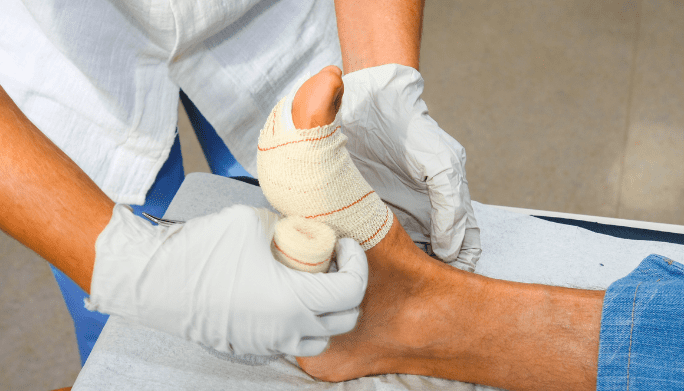
Wound care is one of the most common—and complex—services podiatrists provide. Proper billing and coding are essential for timely reimbursement and to avoid costly denials.
Why Wound Care Billing Matters
Chronic foot wounds, diabetic ulcers, and pressure sores are time-intensive to treat. If documentation or coding is incomplete, payers may reject the claim, delaying payment for care you’ve already provided.
Key CPT Codes for Wound Care
Some of the most frequently used wound care codes in podiatry include:
- 97597 / 97598: Selective debridement (first 20 sq. cm, add-on code for each additional 20 sq. cm)
- 11042 – 11047: Excisional debridement of subcutaneous tissue, muscle, or bone
- 97602: Non-selective debridement (e.g., wet-to-dry dressings)
Documentation Best Practices
- Record wound size, depth, and location at every visit.
- Specify method of debridement (sharp, mechanical, enzymatic).
- Include before-and-after measurements to show progress.
- Attach supporting photos when possible (many payers request them).
Common Denial Reasons
- Missing wound measurements
- Inconsistent progress notes
- Lack of medical necessity documentation
How to Avoid Denials
- Use a checklist to ensure documentation is complete before claim submission.
- Scrub claims with your EMR or billing software to catch missing modifiers.
- Train staff to code based on wound depth, not just size.
Key Takeaway
Consistent documentation and correct coding are the cornerstones of successful wound care billing. A streamlined workflow helps your practice get reimbursed faster and keeps your revenue cycle healthy.

Managing billing in-house used to be the norm for podiatry practices. But as coding rules become more complex and staff costs continue to rise, many providers are rethinking the way they handle revenue cycle management. So what’s the better choice in 2025: outsourcing or keeping it internal?

In-House Billing: The Pros and Cons
Pros:
- You maintain full control over processes.
- Staff is accessible and communication is immediate.
- Billing team can be trained in your specific workflows.
Cons:
- High overhead: salaries, benefits, and training.
- Limited expertise in specialized podiatry coding.
- Increased risk of errors and delayed reimbursements.
Outsourced Podiatry Billing: Why It’s Gaining Ground
Outsourcing to a podiatry-specific billing company offers:
- Specialized knowledge in foot care coding, modifiers, and compliance.
- Lower long-term costs due to fewer denials and faster payments.
- Access to tools and technology that improve claim accuracy.
- Less stress for your front desk and admin staff.
Cost Comparison: In-House vs. Outsourcing
In-house billing can cost upwards of $60K per year for just one experienced biller, not including software, hardware, and training. Outsourcing, on the other hand, often works on a percentage basis (typically 4-7% of collections), making it more scalable and predictable.
When Outsourcing Makes Sense
- You’re a small to mid-sized practice without billing volume to justify a full department.
- You’ve experienced frequent denials or audit flags.
- You want to reduce administrative overhead and improve cash flow.
Why Podiatrists Trust A Step Above Health We specialize in podiatry billing. Our team understands the ins and outs of routine foot care, diabetic ulcer coding, and surgical modifiers. We not only submit claims—we proactively manage your revenue cycle to reduce denials, improve cash flow, and give you peace of mind.
Conclusion
If you’re struggling with staffing, rising costs, or persistent billing errors, it might be time to consider outsourcing. At A Step Above Health, we make billing easy so you can focus on patient care.
Get in touch for a custom quote and learn how much more your practice could be collecting.
Billing errors in podiatry are more common than many practices realize—and they can be costly. From denied claims to lost reimbursements, even small mistakes can have a big financial impact. If your billing team isn’t laser-focused on accuracy, you could be leaving thousands of dollars on the table every month.

Here are seven of the most common podiatry billing mistakes and how to avoid them:
- Misusing Modifiers (Especially 25 and 59)Modifiers clarify the services rendered, but when used incorrectly—such as Modifier 25 for E/M services or Modifier 59 to bypass edits—they often trigger denials. Always ensure your documentation supports the use of any modifier.
- Incomplete Documentation for Routine Foot CareRoutine foot care is a frequent target for audits. If you’re billing for services like nail debridement or callus removal, your notes must clearly show medical necessity, especially for patients with systemic conditions like diabetes.
- Billing for Non-Covered ServicesPayers often update their lists of covered and non-covered services. Submitting claims for services not covered under the patient’s plan will lead to denials unless the patient signed an ABN (Advance Beneficiary Notice) beforehand.
- Incorrect Use of Diagnosis CodesPairing the wrong ICD-10 code with a CPT code is a surefire way to get denied. For podiatry, specificity matters—including laterality (left vs. right) and condition stage.
- Missing Timely Filing DeadlinesEach payer has different rules about how long you have to submit a claim. Delays in documentation, coding, or claim submission can lead to permanent loss of reimbursement.
- Overlooking Secondary InsuranceFailing to coordinate benefits between primary and secondary insurance results in delays and missed payments. Ensure staff checks for multiple active policies and submits claims in the correct order.
- Not Following Up on Denied ClaimsDenied doesn’t mean dead. Many claims can be recovered with a timely appeal. Having a system in place to review and resubmit denials is essential for maximizing revenue.
Conclusion
Avoiding these common billing pitfalls can significantly improve your podiatry practice’s financial health. If you’re tired of losing money due to billing errors, A Step Above Health offers expert podiatry billing services to help you get paid faster and more accurately.
Schedule your free billing assessment today and discover what your practice might be missing
In the world of podiatry billing, details matter — and one wrong detail can cost your practice thousands. One of the most surprising billing errors we’ve encountered involved a podiatrist who performed surgery on the right foot, but every single note, code, and modifier submitted to insurance said it was the left.
That discrepancy led to a full claim denial — and a complete loss of revenue for a medically necessary procedure.

🚫 What Went Wrong?
Although the procedure was performed correctly, the documentation told a different story — or rather, it failed to tell the right one.
The CPT codes, ICD-10 diagnoses, and all modifiers listed “left foot.” From the insurance company’s perspective, there was no proof that surgery had taken place on the right foot at all. And if the records don’t support the service billed, they won’t pay.
Sadly, this type of error isn’t rare. We see it frequently, not just with surgical laterality, but with:
- Incorrect or missing modifiers
- Diagnosis and procedure mismatches
- Vague or incomplete clinical notes
🧠 Documentation Is More Than a Requirement — It’s a Defense
When an insurance payer asks for your records, your documentation becomes your voice. It’s the only proof of what actually happened during the visit or procedure.
If your documentation doesn’t clearly align with your codes, it’s more than a technicality — it’s a revenue blocker.
Every provider should ask:
- Does my documentation reflect exactly what I did?
- Are my CPT, ICD-10, and modifiers supported by my chart?
- Did I document laterality, timing, and global periods correctly?
✅ The Role of a Billing Partner
At A Step Above Health Management, we take a proactive approach to billing. Our team carefully reviews documentation and coding for inconsistencies — flagging issues before they turn into denials.
But even the best billing company can’t code what isn’t properly documented.
That’s why we encourage all providers to:
- Take time to document accurately (don’t rush!)
- Understand what your codes and modifiers actually mean
- Use modifiers like 25, 59, 24, and 79 correctly — especially in podiatric care
💡 Bottom Line
Your notes aren’t just paperwork — they’re the foundation of your revenue. If your documentation doesn’t align with your codes, your claim won’t get paid.
But with accurate, thorough charting and a billing team that knows podiatry, you can avoid costly mistakes and pass audits with confidence.
Need help reviewing your documentation and coding?
At A Step Above Health, we specialize in identifying the hidden billing issues that are draining your revenue. If you’re tired of surprise denials or costly errors, we’re here to help.
📲 Let’s connect. Your revenue deserves the right support.
Let’s face it: medical billing isn’t exactly the highlight of anyone’s day. But with the right strategies, it can be a lot less stressful and a lot more profitable. Here’s how to make 2025 the year you master podiatry coding.

The Key to Success: Documentation
They say a picture’s worth a thousand words, but in billing, it’s all about the words. Clear, detailed documentation is your ticket to accurate coding and timely reimbursements.
- Be Specific: Describe procedures in detail to avoid miscoding. Include all relevant details, such as the location, size, and depth of wounds or the specifics of surgical procedures.
- Use Templates Wisely: Standardize notes without losing personalization. A good template can save time while ensuring all essential details are captured.
Modifier Magic
Modifiers are the unsung heroes of coding. They clarify nuances in your care, preventing denials and ensuring proper payment.
- Most Common Modifiers: Familiarize yourself with 25, 59, and others relevant to podiatry. Understand when and why each is used.
- Avoid Overuse: Use modifiers judiciously to maintain compliance and avoid red flags during audits.
Leverage Technology
AI-driven tools are revolutionizing medical billing. From error detection to predictive analytics, these solutions are game-changers for podiatry practices. Embrace tools that integrate seamlessly with your EHR system and offer real-time coding assistance.
By adopting these strategies, you’ll not only reduce stress but also enhance your practice’s efficiency. Remember, you don’t have to do it alone. Partnering with a billing expert can save you time, money, and a whole lot of headaches. Ready to take control of your billing in 2025? Let’s make it happen!

Why Podiatry Practices Should Outsource Their Medical Billing
Running a successful podiatry practice requires more than just excellent patient care. Managing medical billing in-house can be time-consuming, complex, and prone to errors, leading to lost revenue and increased administrative stress. Many podiatrists are now turning to outsourced billing services to streamline operations, reduce claim denials, and maximize reimbursements. Here’s why outsourcing your podiatry billing could be the best decision for your practice.
1. Reduce Administrative Burden and Improve Efficiency
Managing billing in-house requires a dedicated team to handle coding, claims processing, follow-ups, and payment posting. Outsourcing can help by:
- Freeing up time for office staff to focus on patient care and scheduling.
- Reducing administrative workload associated with denial management and appeals.
- Ensuring claims are processed accurately and promptly by experienced billing professionals.

2. Minimize Billing Errors and Claim Denials
Mistakes in coding and claim submissions can lead to delayed payments and revenue loss. Professional billing services help:
- Reduce errors in CPT coding and modifier usage.
- Ensure claims are submitted correctly the first time to minimize denials.
- Keep up with insurance policy changes and payer requirements.
3. Increase Revenue and Improve Cash Flow
By outsourcing podiatry billing, practices can experience:
- Faster claims processing and reimbursements.
- Improved collections on unpaid claims through dedicated follow-ups.
- Higher revenue due to accurate coding and efficient billing workflows.

4. Ensure Compliance with Insurance Regulations
Medical billing regulations are constantly evolving, and failure to comply can result in claim denials or legal issues. Outsourced billing companies:
- Stay updated on Medicare, Medicaid, and private insurance policies.
- Ensure claims meet Local Coverage Determinations (LCDs) and National Coverage Determinations (NCDs).
- Reduce the risk of non-compliance penalties.
5. Reduce Overhead Costs
Hiring and training an in-house billing team can be costly. Outsourcing helps practices:
- Eliminate the need for billing software and infrastructure investments.
- Reduce payroll expenses associated with billing staff.
- Pay only for billing services used, rather than maintaining full-time employees.
6. Access to Advanced Technology and Reporting
Professional billing companies use state-of-the-art billing software that provides:
- Real-time reporting to track claims and payments.
- Data analytics to identify revenue trends and optimize billing strategies.
- Secure and compliant billing systems that reduce fraud and data breaches.
7. Focus on Patient Care Instead of Billing Issues
By outsourcing billing, podiatrists and office staff can:
- Spend more time with patients instead of handling billing concerns.
- Avoid frustration with insurance claim follow-ups and denials.
- Improve overall patient satisfaction by streamlining front-office tasks.
How to Choose the Right Podiatry Billing Service
Not all medical billing companies are the same. When selecting a billing service, consider:
- Experience in podiatry billing – Ensure they understand podiatry-specific CPT codes and payer policies.
- Track record of claim success – Look for companies with high first-pass approval rates.
- Technology integration – Ensure they work with your EHR and practice management system.
- Transparent pricing – Choose a service that offers clear and competitive pricing models.
Final Thoughts
Outsourcing podiatry billing can transform the efficiency and profitability of your practice. With reduced administrative stress, fewer errors, increased revenue, and improved compliance, professional billing services allow podiatrists to focus on what matters most—providing quality patient care. If your practice struggles with billing inefficiencies or revenue cycle management, outsourcing may be the ideal solution to enhance financial performance.
Denials in podiatry billing often occur for specific reasons, including:
- Lack of Medical Necessity – Insurers may deny claims for routine foot care, such as nail trimming and callus removal, if not properly documented as medically necessary.
- Coordination of Benefits Issues – Coverage conflicts between multiple insurers that affect patient eligibility.
- Incorrect Coding or Modifiers – Errors in CPT codes or the use of inappropriate modifiers for podiatry-specific procedures.
- Failure to Meet LCD/NCD Guidelines – Podiatric services often fall under Local Coverage Determinations (LCDs) and National Coverage Determinations (NCDs), requiring specific documentation.
- Timely Filing Violations – Claims submitted past the insurer’s deadline, which varies by payer.

Best Practices for Handling Denials in Podiatry Billing
1. Analyze and Categorize Denials
- Track denial patterns related to common podiatric procedures.
- Categorize denials by payer, reason, and coding issue to identify trends.
2. Create a Standardized Appeal Process
- Develop a template for appealing common podiatry-related denials, ensuring the necessary medical necessity documentation is included.
- Submit appeals within the insurer’s deadline and provide supporting evidence, such as treatment notes and imaging.
3. Improve Documentation and Coding Accuracy
- Train staff on podiatry-specific coding, including the use of appropriate modifiers (e.g., -25 for significant separate evaluation and management services, or -59 for distinct procedural services).
- Ensure proper documentation supports the medical necessity of foot care treatments, including diabetic foot care and wound management.
4. Maintain Open Communication with Payers
- Build relationships with insurer representatives to clarify coverage policies related to podiatric care.
- Request detailed explanations for denials, particularly for routine foot care exclusions, to prevent future occurrences.
5. Monitor Timely Filing Deadlines
- Set up alerts for approaching claim submission deadlines to ensure timely filing.
- Keep track of each insurer’s podiatry-specific filing requirements to avoid unnecessary rejections.
- Podiatrists can join forces through industry coalitions and professional organizations to exert collective pressure on policymakers and insurers.
